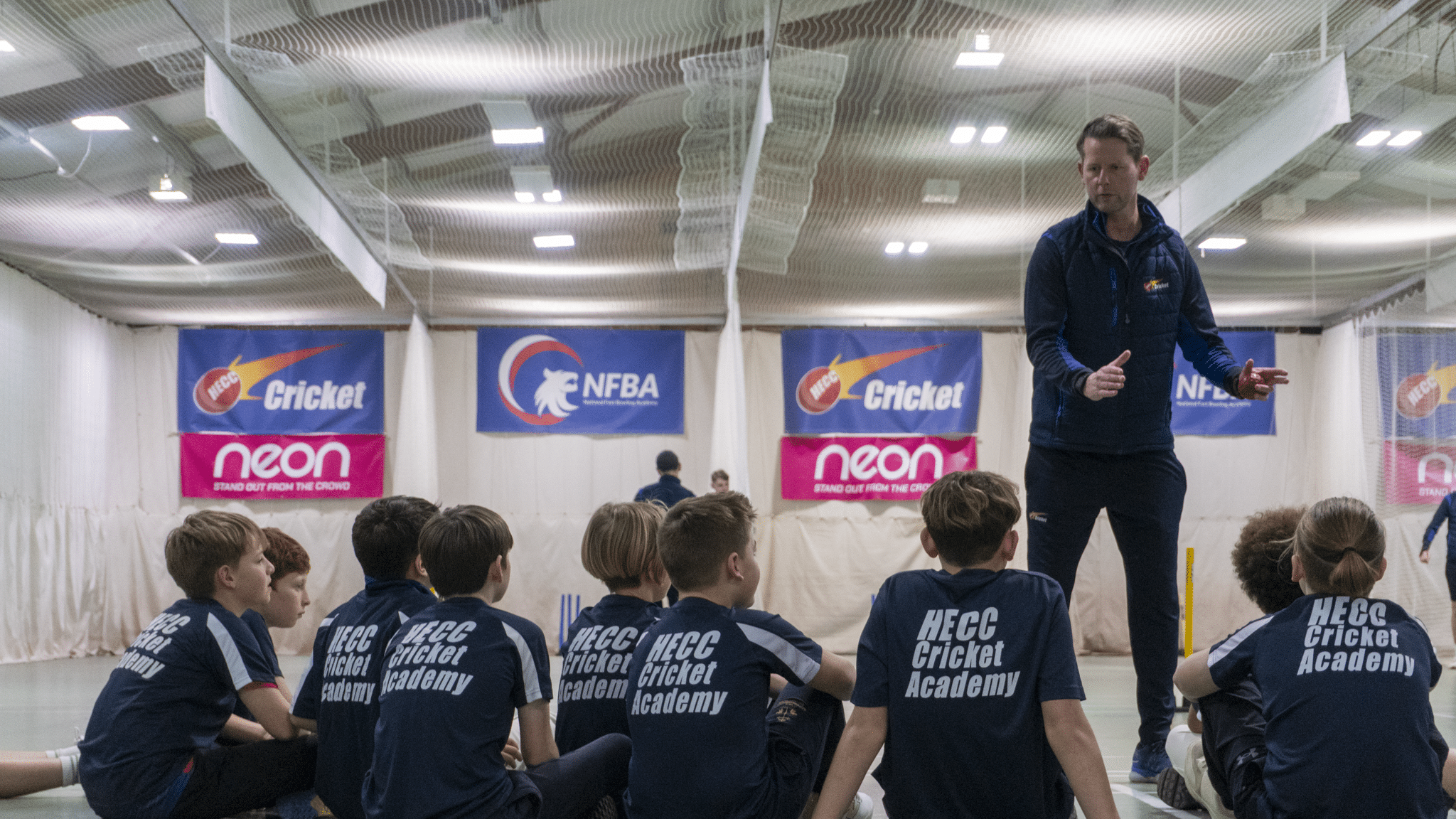
 If you are thinking about signing your child up for a cricket academy, you probably have a lot of questions. What will they actually do in each session? How do the coaches teach? Will it suit my child’s age and ability? And is it worth the commitment?
This post answers all of that. We have put together a plain, honest walk-through of what a typical week looks like across HECC Cricket’s junior programmes in Sawbridgeworth. Whether your child is just starting out or has been playing for a few years, here is what you can expect.
Who Is This For?
HECC Cricket runs structured programmes for young players across a wide age range. The three main junior options are:
- Junior Development Squad (ages 6-11) for beginners building their first cricket skills
- Junior Academy (ages 8-11) for players who are ready to develop more specific batting, bowling, and fielding technique
- Emerging Academy (ages 11-13) for committed, motivated players who want a more intensive environment
Each programme runs across three terms through the year, inside HECC’s specialist indoor facility at Tharbies Farm, Sawbridgeworth.
A Session Is Not Just Nets
One of the biggest things parents get wrong is assuming a cricket academy is just kids taking turns hitting balls in nets. It is much more structured than that.
Each session is planned around specific skills and age-appropriate goals. Coaches use a range of activities, not just net practice, to help players improve across all three disciplines: batting, bowling, and fielding.
Here is a rough breakdown of what a session might include:
| Part of Session | What Happens |
|---|---|
| Warm-up | Dynamic movement exercises, coordination games, throwing and catching drills |
| Skill Focus | Targeted batting or bowling technique work, often in small groups |
| Drill Practice | Repetition-based drills to build muscle memory (e.g., driving off the front foot, release point for bowling) |
| Small-sided Games | Match-style scenarios where players use the skills they have just practised |
| Video Feedback | At higher levels, coaches use video analysis to show players exactly what they are doing |
| Cool-down and Review | Coaches summarise what was covered and what to work on before next session |
Sessions in the Junior Development Squad run for 55 minutes. The Emerging Academy sessions are 90 minutes, which allows for more depth in each area.
What Skills Are Covered?
Batting
Depending on age and level, players work on the basics of stance and grip right through to playing specific shots under pressure. Common drills include:
- Front foot drives using a batting tee or drop feeds
- Pulling short-pitched deliveries using a throw-down or bowling machine
- Running between the wickets and calling practice
- Match simulation, where players are given scenarios to make decisions (for example: two balls to go, six runs needed)
Bowling
Bowling technique is one of the most important areas to get right early, and HECC coaches pay close attention to each player’s action. Work often includes:
- Run-up and approach drills, focusing on rhythm and consistency
- Release point work to improve accuracy
- Length and line targeting, hitting specific areas of the pitch
- Bowling machine sessions where players face different deliveries and learn to read the ball
Fielding
Fielding is often the part of training younger players enjoy most. Activities include ground fielding, catching, throwing accuracy, and positional awareness in small-sided games.
How Coaches Give Feedback
HECC’s coaches hold qualifications from Level 2 through to Level 4 under the ECB coaching framework. That means the feedback your child gets is structured and evidence-based, not just personal opinion.
At the junior levels, coaches give feedback in simple language during and after drills. The focus is on one or two key points per session, so players are not overwhelmed with information. At the Emerging Academy level, video analysis is used so players can see their own technique on screen and understand what to change.
Coaches are careful to keep feedback positive and constructive. The goal is to build confidence alongside skill.
What Is the LTAD Model and Why Does It Matter?
You may see the term LTAD mentioned across HECC’s programmes. It stands for Long Term Athlete Development, and it is the framework used by the ECB and other national governing bodies to guide how young athletes should be trained at each stage of their development.
The key idea is simple: the right training at the wrong age can actually slow a player down. Children aged 6-8, for example, learn best through play and broad movement skills. Players aged 10-12 are at a stage where their bodies can begin absorbing more specific technique. Older teenagers are ready for more intense, performance-focused training.
HECC structures each programme around the LTAD stage that matches the age group. This means your child is not being pushed too hard too soon, and they are not being held back by a one-size-fits-all approach.
You can learn more about how the ECB approaches youth cricket development on the ECB’s junior cricket page, which covers the national pathway from entry-level programmes through to county representation.
What Changes as Players Get Older?
The step up between programmes is gradual but noticeable. Here is a quick summary of what changes:
Junior Development Squad (ages 6-11) The focus is on fun, fundamentals, and getting comfortable with the game. Small-sided games and basic skill drills are central to every session. Players work through three levels (JDS1, JDS2, JDS3) matched to their age.
Junior Academy (ages 8-11) Players at this level have a foundation in place and are ready to sharpen their technique. Sessions are more structured, with a clear focus on hardball cricket and building game awareness alongside skill development.
Emerging Academy (ages 11-13) This programme is invitation-based and designed for players who show real commitment to the game. Sessions are 90 minutes, include video analysis, psychology elements, and access to specialist batting, bowling, and fielding coaches. Players get exclusive use of the HECC facility during sessions.
What Should My Child Bring?
For most sessions, players need comfortable sports kit. Specialist cricket whites are not required at junior level. At higher levels, players receive a HECC shirt as part of their registration. Coaching equipment is provided.
Is There a Clear Pathway?
Yes. HECC’s programmes are designed to connect, so your child has a route through as they improve. The full academy pathway shows how each programme leads to the next, from the earliest beginner squads right through to the Senior Academy for players aged 14 and above.
If you are not sure which programme is the right fit, the coaching team can help with that. New players to the Emerging Academy who are unknown to the coaching staff go through a short trial session before being offered a place.
Ready to Find Out More?
Sessions run across the week at HECC’s Sawbridgeworth facility, with daytime appointments also available. The best next step is to get in touch directly and ask about current availability for your child’s age group.
Call 01279 724782 or email enquiries@heccsport.com.